Education
Daniel Christopher Allison: Biography, Career, Achievements, Personal Life, and Lasting Legacy


The name Daniel Christopher Allison has attracted growing interest among people searching online for reliable and comprehensive information. Whether readers are looking to understand his background, professional accomplishments, personal journey, or overall influence, having a well-organized resource can make it much easier to explore the available information. Interest in individuals often grows because of their work, public presence, or contributions to their field, leading people to seek trustworthy articles that provide clear and balanced coverage.
This article presents an in-depth overview of Daniel Christopher Allison, exploring his early life, educational background, professional development, achievements, personal interests, and lasting impact. Rather than focusing only on isolated facts, the article offers a broader perspective on the experiences and milestones that have shaped his journey. Readers who want a complete understanding of Daniel Christopher Allison will find detailed sections that answer common questions while presenting information in an organized and reader-friendly format.
Early Life and Background
Understanding the early years of Daniel Christopher Allison helps provide context for the experiences that influenced his future. Like many individuals whose careers or public profiles attract attention, the foundation of his life began with education, family values, and personal ambitions developed during childhood and adolescence. Early experiences often play a significant role in shaping character, work ethic, leadership abilities, and long-term goals.
Family support, educational opportunities, and community involvement frequently contribute to an individual’s personal growth. These formative influences encourage the development of important skills such as communication, critical thinking, perseverance, and adaptability. Although every person’s journey is unique, examining these foundational aspects helps readers appreciate how early experiences can influence later accomplishments and professional success.
As public interest continues to grow, readers often search for verified information about Daniel Christopher Allison’s background, making accurate and balanced reporting especially valuable.
Education and Personal Development
Education is often one of the strongest influences on an individual’s future success, and it serves as the foundation for intellectual and professional growth. Throughout the educational journey, people develop technical knowledge while also strengthening important life skills such as leadership, collaboration, analytical thinking, and effective communication.
For Daniel Christopher Allison, educational experiences likely contributed to the development of the expertise and confidence needed to pursue professional goals. Formal education, combined with practical learning experiences and continuous self-improvement, often equips individuals with the ability to adapt to changing industries and evolving career opportunities. Lifelong learning remains an essential characteristic of successful professionals, allowing them to remain informed, innovative, and prepared for new challenges.
Career Journey
The professional journey of Daniel Christopher Allison represents an important aspect of his public profile. Every career evolves through a combination of experience, determination, continuous learning, and the ability to overcome challenges. Professional success is rarely achieved overnight; instead, it develops through consistent effort, strategic decision-making, and a commitment to excellence.
Throughout a career, individuals may take on different responsibilities, contribute to various projects, and build expertise across multiple areas. These experiences help establish credibility while expanding professional knowledge and practical skills. Career growth often reflects both personal dedication and the ability to adapt to changing environments, making long-term success possible through persistence and continuous improvement.
Professional Achievements
Achievements serve as measurable indicators of professional growth and demonstrate the impact an individual has made within their field. Recognition may come in many forms, including successful projects, leadership roles, industry contributions, publications, innovations, or community involvement.
The accomplishments associated with Daniel Christopher Allison illustrate how consistent dedication can produce meaningful results over time. Professional achievements not only highlight expertise but also inspire others who are pursuing similar career paths. Success is often built upon years of learning, collaboration, problem-solving, and commitment to delivering quality work.
Personal Life and Interests
While professional accomplishments often receive the most public attention, understanding personal interests provides a more complete picture of an individual. Hobbies, community involvement, family relationships, and personal values contribute significantly to overall character and well-being.
Maintaining a healthy balance between professional responsibilities and personal life is important for long-term success. Individuals who prioritize continuous personal growth alongside career development often demonstrate resilience, creativity, and strong interpersonal relationships. Readers interested in Daniel Christopher Allison frequently seek insights into both professional accomplishments and personal interests, reflecting a broader curiosity about the person behind the public profile.
Influence and Legacy
Influence extends beyond immediate achievements and reflects the lasting impression an individual leaves on colleagues, communities, and future generations. A meaningful legacy is built through consistent contributions, ethical decision-making, and a commitment to excellence.
The growing online interest surrounding Daniel Christopher Allison suggests that readers are interested not only in factual information but also in understanding the broader significance of his work and experiences. Lasting influence often comes from inspiring others, sharing knowledge, and contributing positively within professional and personal communities. Over time, these contributions become an important part of an individual’s legacy.
Interesting Facts About Daniel Christopher Allison
Several aspects contribute to the growing curiosity surrounding Daniel Christopher Allison. Readers are often interested in learning about professional milestones, educational background, career progression, notable accomplishments, and personal interests. While public information may vary depending on available sources, interest continues to increase as more people seek comprehensive and reliable details.
Learning interesting facts helps readers develop a broader understanding of an individual’s journey and provides additional context beyond basic biographical information. This balanced perspective allows readers to appreciate the combination of personal determination, education, experience, and professional achievement that contributes to long-term success.
Why People Search for Daniel Christopher Allison
Search trends indicate that many users look for detailed information when they encounter a notable name online. People commonly search for biographies, career histories, achievements, educational backgrounds, family information, and other publicly available details to gain a better understanding of an individual’s background.
The keyword Daniel Christopher Allison reflects this natural curiosity, as readers seek reliable, well-structured content that answers common questions in one place. Comprehensive articles that organize information clearly are more likely to satisfy user intent and perform well in search results.
Conclusion
Interest in Daniel Christopher Allison continues to grow as readers search for reliable and informative content about his life, career, achievements, and personal background. A comprehensive overview helps readers understand not only the facts associated with his professional journey but also the broader experiences and values that contribute to his overall story.
As with any biographical topic, presenting information accurately, clearly, and in a well-structured format is essential for building trust with readers. By exploring early life, education, career development, professional accomplishments, personal interests, and lasting influence, this article provides a balanced introduction to the subject while answering many of the questions people commonly search online.
Frequently Asked Questions (FAQs)
Who is Daniel Christopher Allison?
Daniel Christopher Allison is an individual whose biography, career, achievements, and personal background have attracted online interest from readers seeking reliable information.
Why is Daniel Christopher Allison searched online?
People search for Daniel Christopher Allison to learn about his life, professional career, accomplishments, education, and other publicly available information.
What is Daniel Christopher Allison known for?
The answer depends on the verified public information available about him. Readers are generally interested in his professional work, achievements, and contributions.
Where can I find reliable information about Daniel Christopher Allison?
Reliable information should come from verified public records, reputable publications, official websites, or credible interviews rather than unverified sources.
What makes Daniel Christopher Allison interesting?
Readers are often interested in his background, career progression, accomplishments, and the experiences that have contributed to his public profile.

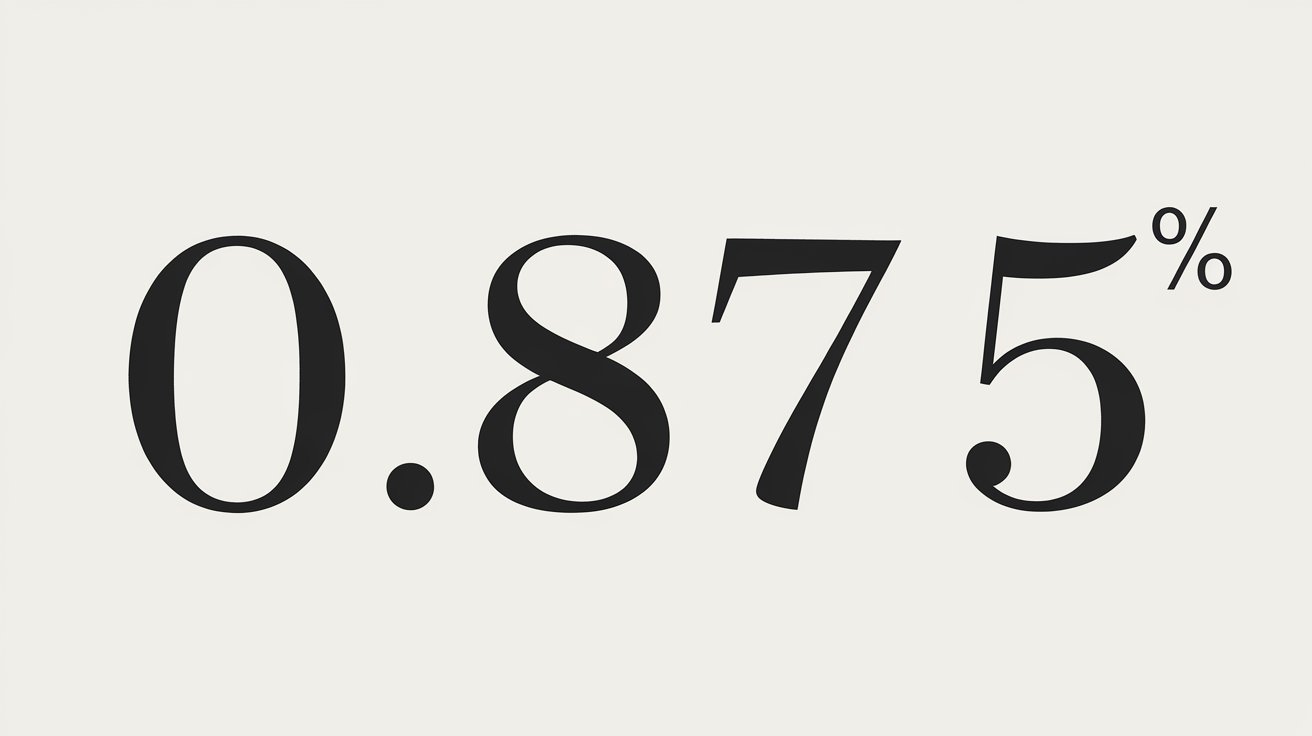
Converting decimals into fractions is one of the most important skills in mathematics. Whether you are a student completing homework, a teacher preparing classroom materials, or someone refreshing basic math skills, understanding decimal-to-fraction conversion helps build a stronger foundation in arithmetic and algebra. One of the most frequently searched decimal conversions is .875 as a fraction because it appears in measurements, construction, engineering, finance, and everyday calculations. Although the decimal may initially seem difficult to convert, the process is actually straightforward once you understand the underlying method. By learning a simple step-by-step approach, you can convert not only .875 but also many other decimals with confidence.
In this complete guide, you’ll learn exactly how to convert .875 into a fraction, simplify it to its lowest terms, understand why the answer works, explore real-world applications, avoid common mistakes, and practice similar examples. By the end of this article, you’ll have a clear understanding of decimal-to-fraction conversions that you can apply to many other math problems.
What Is .875 as a Fraction?
The decimal .875 written as a fraction is:
875/1000
Since both the numerator and denominator are divisible by 125, simplify the fraction.
875 ÷ 125 = 7
1000 ÷ 125 = 8
Therefore,
.875 = 7/8
This is the simplest form because 7 and 8 have no common factors other than 1.
Final Answer:
.875 = 7/8
Step-by-Step Method to Convert .875 into a Fraction
Learning the conversion process helps you solve many similar problems instead of memorizing answers. Begin by writing the decimal as a fraction. Since there are three digits after the decimal point, use 1000 as the denominator.
Step 1
Write:
875/1000
Next, identify the greatest common divisor of both numbers. The greatest common divisor is 125.
Divide both numbers by 125.
875 ÷ 125 = 7
1000 ÷ 125 = 8
The simplified answer becomes:
7/8
This method works because dividing both the numerator and denominator by the same number keeps the value unchanged while making the fraction easier to read.
Why Does .875 Equal 7/8?
Many students wonder why these two numbers are equal. A fraction represents division. When you divide 7 by 8, the result is:
7 ÷ 8 = 0.875
This confirms that the simplified fraction and decimal represent exactly the same quantity.
Decimal Place Value Explained
Understanding place value makes decimal conversion much easier.
- 0.8 = Eight tenths
- 0.87 = Eighty-seven hundredths
- 0.875 = Eight hundred seventy-five thousandths
Because .875 has three decimal places, the denominator becomes 1000 before simplification.
Simplifying Fractions
Simplifying means reducing a fraction until the numerator and denominator have no common factors except 1.
For 875/1000:
Common factors include:
- 5
- 25
- 125
The greatest common factor is 125.
After dividing both numbers by 125:
875/1000 = 7/8
This is the simplest form.
Visual Understanding
Imagine a pizza divided into eight equal slices.
If you eat seven slices, you’ve eaten:
7/8
Expressed as a decimal, this equals:
0.875
The fraction and decimal describe exactly the same portion.
Real-Life Examples
The decimal .875 appears in many practical situations. In construction, measurements are often written as decimals and then converted into fractions for precision. Carpenters may encounter dimensions such as 0.875 inches, which equals 7/8 inch. Engineers, architects, and machinists frequently perform similar conversions when interpreting technical drawings or manufacturing specifications.
Cooking also provides useful examples. While measuring ingredients, recipes sometimes require converting decimal values into fractional measurements that are easier to understand using measuring cups or spoons. Students working through science experiments, financial calculations, and statistical analyses also benefit from recognizing that 0.875 and 7/8 represent the same value.
Common Mistakes
Many learners make avoidable errors during decimal conversion.
One common mistake is writing 875/100 instead of 875/1000. Since .875 has three digits after the decimal, the denominator must be 1000.
Another mistake is forgetting to simplify the fraction. Although 875/1000 is technically correct, it is not in its simplest form. Most teachers and exams expect the simplified answer 7/8.
Some students also divide incorrectly or use the wrong common factor. Checking your work by converting the simplified fraction back into a decimal is a reliable way to confirm the answer.
Similar Decimal-to-Fraction Conversions
| Decimal | Fraction |
|---|---|
| 0.125 | 1/8 |
| 0.25 | 1/4 |
| 0.375 | 3/8 |
| 0.5 | 1/2 |
| 0.625 | 5/8 |
| 0.75 | 3/4 |
| 0.875 | 7/8 |
Recognizing these common conversions makes solving math problems much faster.
Practice Problems
Try converting these decimals into fractions:
- 0.625
- 0.375
- 0.125
- 0.25
- 0.75
Answers:
- 5/8
- 3/8
- 1/8
- 1/4
- 3/4
Practicing with familiar decimal values strengthens your understanding and prepares you for more advanced fraction problems.
Why Learning Decimal-to-Fraction Conversion Is Important
Converting decimals into fractions is a foundational mathematical skill that supports learning in arithmetic, algebra, geometry, and higher-level mathematics. Beyond the classroom, this ability is valuable in fields such as engineering, architecture, finance, carpentry, and science. Many measurements, formulas, and calculations require switching between decimal and fractional forms depending on the context.
Understanding the relationship between decimals and fractions also improves mental math and estimation. Instead of relying solely on calculators, you can quickly recognize equivalent values and solve problems more efficiently.
Tips for Converting Any Decimal into a Fraction
Whenever you convert a decimal into a fraction, begin by counting the number of digits after the decimal point. Use 10, 100, 1,000, or another power of ten as the denominator based on that count. Remove the decimal point to create the numerator, then simplify the resulting fraction by dividing both the numerator and denominator by their greatest common factor. Finally, verify your answer by dividing the numerator by the denominator to ensure it matches the original decimal.
Conclusion
Converting .875 as a fraction is simple once you understand the process. Start by writing 875/1000, identify the greatest common factor of 125, and divide both the numerator and denominator by that number. The result is 7/8, which is the simplest form of the fraction. This conversion is widely used in mathematics, education, engineering, construction, and everyday problem-solving. Learning this method not only helps with one decimal but also provides a reliable strategy for converting many other decimals into fractions. With regular practice, decimal-to-fraction conversion becomes a quick and valuable skill that supports success in both academic and real-world situations.
Frequently Asked Questions (FAQ)
What is .875 as a fraction?
The decimal .875 is equal to 7/8 in its simplest form.
How do you convert .875 into a fraction?
Write it as 875/1000, then divide both numbers by 125 to get 7/8.
Is 875/1000 a correct answer?
Yes, but it is not simplified. The simplest form is 7/8.
Why is .875 equal to 7/8?
Dividing 7 by 8 gives 0.875, proving they are equivalent.
Can calculators convert decimals into fractions?
Yes. Many scientific and graphing calculators include a fraction conversion feature, but understanding the manual method is useful for exams and everyday problem-solving.
What is the easiest way to convert decimals into fractions?
Write the decimal over the appropriate power of 10 based on the number of decimal places, then simplify the fraction by dividing the numerator and denominator by their greatest common factor.
Is 7/8 the simplest form?
Yes. Since 7 and 8 share no common factors other than 1, 7/8 is already in lowest terms.
Where is .875 commonly used?
The decimal 0.875 is commonly used in measurements, construction, engineering, manufacturing, finance, education, and everyday calculations where precise values are needed.
Fractions and decimals are two different ways of representing the same value in mathematics. Whether you are a student preparing for school exams, a college learner reviewing arithmetic, a teacher creating lesson plans, or simply someone who wants to improve everyday math skills, understanding how to convert a fraction to a decimal is an essential skill. Decimal numbers appear everywhere in daily life, including shopping, banking, measurements, engineering, statistics, cooking, and scientific calculations. Learning how fractions become decimals helps you perform calculations more accurately and understand mathematical relationships more clearly.
Many learners believe fraction-to-decimal conversion is difficult because it involves division, but the process is actually straightforward once you understand the underlying concept. Every fraction represents a division problem where the numerator is divided by the denominator. Some fractions produce terminating decimals, while others create repeating decimals that continue indefinitely. By mastering these concepts, you will become more confident in solving mathematical problems quickly and accurately. This comprehensive guide explains every important aspect of fraction-to-decimal conversion, including formulas, methods, examples, charts, shortcuts, and frequently asked questions.
What Is a Fraction?
A fraction represents part of a whole. It consists of two numbers separated by a horizontal line.
Numerator: The top number representing how many parts are being considered.
Denominator: The bottom number showing the total number of equal parts.
Example:
3/4
- Numerator = 3
- Denominator = 4
The fraction means three out of four equal parts.
What Is a Decimal?
A decimal is another way of expressing fractions using a decimal point. Decimals make calculations easier and are widely used in finance, science, engineering, business, and everyday measurements.
Examples include:
- 0.5
- 0.25
- 0.75
- 1.50
- 3.125
Every decimal can also be written as a fraction.
What Does Fraction to Decimal Mean?
Converting a fraction to a decimal means dividing the numerator by the denominator. The answer becomes a decimal number representing exactly the same value.
For example:
1/2 = 0.5
3/4 = 0.75
5/8 = 0.625
Although the appearance changes, the value remains exactly the same.
Formula for Fraction to Decimal
The basic formula is simple:
Decimal = Numerator ÷ Denominator
Every fraction follows this rule.
Examples:
8/10 = 8 ÷ 10 = 0.8
9/4 = 9 ÷ 4 = 2.25
15/20 = 15 ÷ 20 = 0.75
Step-by-Step Method
Suppose we want to convert:
7/8
Step 1: Identify the numerator.
7
Step 2: Identify the denominator.
8
Step 3: Divide.
7 ÷ 8 = 0.875
Therefore:
7/8 = 0.875
Long Division Method
When a calculator is unavailable, long division is an effective way to convert fractions into decimals. Divide the numerator by the denominator, add decimal places and zeros when necessary, continue dividing until the remainder becomes zero or a repeating pattern appears, and then write the resulting decimal. This method strengthens arithmetic skills and helps students understand how decimals are formed rather than relying solely on technology.
Examples
Example 1
1/2
1 ÷ 2 = 0.5
Example 2
3/5
3 ÷ 5 = 0.6
Example 3
5/8
5 ÷ 8 = 0.625
Example 4
7/20
7 ÷ 20 = 0.35
Example 5
9/25
9 ÷ 25 = 0.36
Common Fraction to Decimal Chart
| Fraction | Decimal |
|---|---|
| 1/2 | 0.5 |
| 1/3 | 0.333… |
| 2/3 | 0.666… |
| 1/4 | 0.25 |
| 3/4 | 0.75 |
| 1/5 | 0.2 |
| 2/5 | 0.4 |
| 3/5 | 0.6 |
| 4/5 | 0.8 |
| 1/8 | 0.125 |
| 3/8 | 0.375 |
| 5/8 | 0.625 |
| 7/8 | 0.875 |
| 1/10 | 0.1 |
| 3/10 | 0.3 |
| 7/10 | 0.7 |
Terminating Decimals
A terminating decimal has a finite number of digits after the decimal point. These occur when the denominator’s prime factors are only 2, 5, or both after simplification.
Examples:
- 1/2 = 0.5
- 3/4 = 0.75
- 9/20 = 0.45
These are common in everyday measurements and financial calculations because they end neatly.
Repeating Decimals
A repeating decimal has one or more digits that repeat forever. These are often written with a bar over the repeating digit(s) or represented with ellipses.
Examples:
- 1/3 = 0.333…
- 2/3 = 0.666…
- 1/7 = 0.142857142857…
Recognizing repeating decimals is important in higher-level mathematics and algebra.
Why Learning Fraction-to-Decimal Conversion Is Important
Being able to convert fractions into decimals is valuable in school, higher education, competitive exams, engineering, finance, business, statistics, construction, cooking, and daily budgeting. Many calculators, spreadsheets, and software applications work primarily with decimals, making this skill essential for accurate calculations and problem-solving across many fields.
Common Mistakes to Avoid
Students often divide the denominator by the numerator instead of the other way around, forget to simplify fractions before converting, stop dividing too early, misread repeating decimals as terminating ones, or place the decimal point incorrectly. Practicing carefully and checking your work helps avoid these errors.
Tips for Faster Conversion
Memorize the decimal equivalents of common fractions such as 1/2, 1/4, 3/4, 1/5, and 1/8. Simplify fractions before dividing, use estimation to verify answers, practice long division regularly, and understand the difference between terminating and repeating decimals. Over time, many common conversions become second nature.
Practice Questions
Convert the following fractions into decimals:
- 1/8
- 3/10
- 5/6
- 9/20
- 11/25
- 7/16
- 13/50
- 15/8
- 21/40
- 17/100
Working through these exercises will improve both speed and accuracy.
Conclusion
Understanding how to convert a fraction to a decimal is one of the most practical and important mathematical skills you can learn. By remembering that every fraction represents a division problem, you can confidently convert simple and complex fractions into decimals using long division or a calculator. Whether the result is a terminating decimal or a repeating decimal, the underlying value remains the same. With regular practice, familiar conversion charts, and a clear understanding of the process, you will be able to solve mathematical problems more efficiently in school, work, and everyday life.
Frequently Asked Questions (FAQ)
1. What is a fraction to decimal conversion?
It is the process of dividing the numerator by the denominator to express a fraction as a decimal.
2. What is the formula for converting a fraction to a decimal?
Decimal = Numerator ÷ Denominator.
3. Why do some fractions repeat forever?
Fractions whose simplified denominators contain prime factors other than 2 or 5 produce repeating decimals.
4. Can every fraction be converted into a decimal?
Yes. Every fraction has an equivalent decimal representation, either terminating or repeating.
5. What is 3/4 as a decimal?
3 ÷ 4 = 0.75.
6. What is 5/8 as a decimal?
5 ÷ 8 = 0.625.
7. Is a calculator necessary for fraction-to-decimal conversion?
No. You can use long division to convert any fraction into its decimal equivalent.
8. What is the difference between terminating and repeating decimals?
A terminating decimal ends after a finite number of digits, while a repeating decimal continues indefinitely with a repeating pattern.
9. Why are decimals commonly used instead of fractions?
Decimals simplify calculations, comparisons, measurements, and financial transactions and are widely used in science, engineering, and everyday life.
10. How can I improve my fraction-to-decimal conversion skills?
Practice long division, memorize common fraction-decimal equivalents, simplify fractions before dividing, and solve a variety of practice problems regularly.
Education
Unit 1 Progress Check MCQ Part C Study Guide: Everything You Need to Know to Prepare Successfully
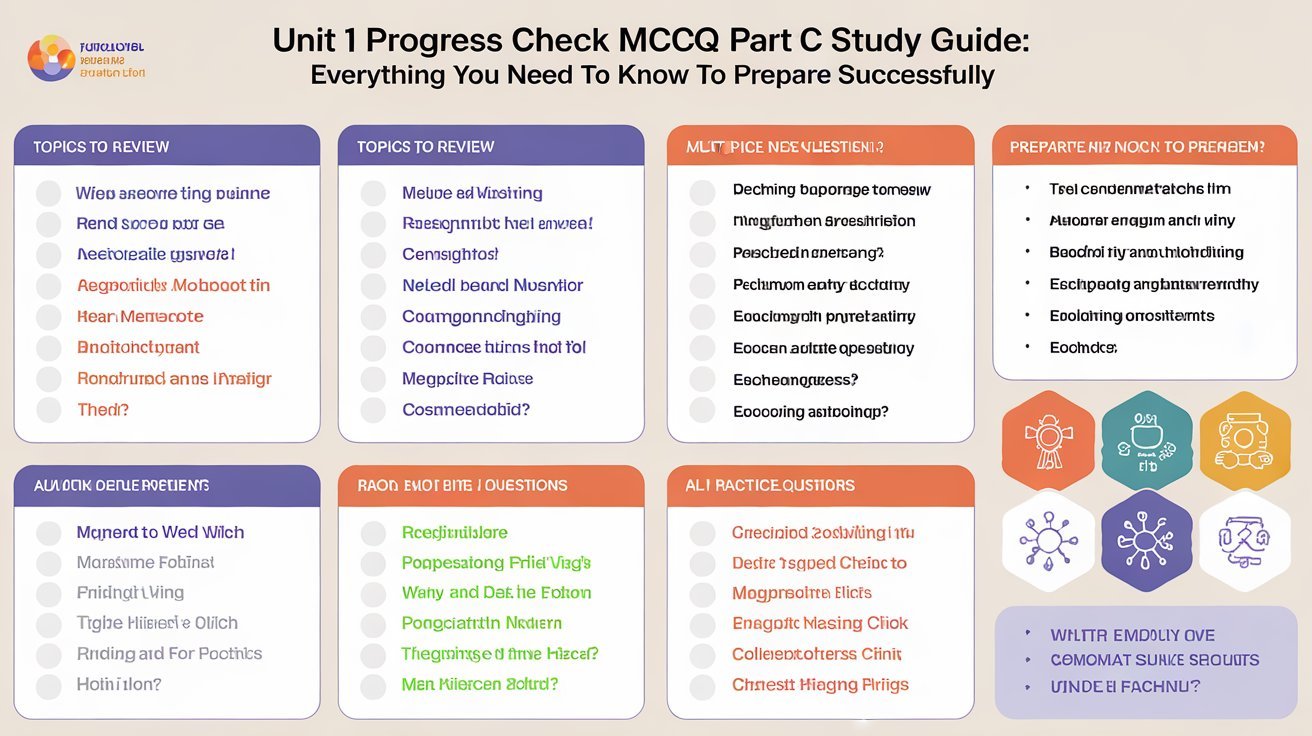
Searching for Unit 1 Progress Check MCQ Part C is common among students who want to prepare effectively for upcoming assessments. While it may be tempting to look for answer keys online, the best way to improve your score is by developing a strong understanding of the concepts covered in Unit 1. A solid grasp of the material helps you answer unfamiliar questions with confidence and prepares you for future exams as well.
This comprehensive study guide explains what Unit 1 Progress Check MCQ Part C typically assesses, the skills you should focus on, effective study techniques, common mistakes to avoid, and practical strategies for improving your performance. Whether you are preparing for an AP course or another class that uses Unit Progress Checks, this guide will help you build knowledge rather than rely on memorization.
What Is Unit 1 Progress Check MCQ Part C?
Unit Progress Checks are designed to evaluate how well students understand the material taught throughout a unit. The multiple-choice section measures conceptual understanding, analytical thinking, and the ability to apply learned principles to new situations. Rather than rewarding simple memorization, these assessments encourage students to interpret information, compare ideas, identify patterns, and draw logical conclusions based on evidence.
Because instructors may use different versions of these assessments, students should focus on mastering the underlying concepts instead of searching for specific questions or answers. Understanding the “why” behind each topic is much more valuable than memorizing isolated facts and leads to stronger long-term academic performance.
How to Prepare Effectively
Preparation begins with reviewing your classroom notes, textbooks, and teacher-provided resources. Start by identifying the major concepts introduced in Unit 1 and create a summary for each topic in your own words. Rewriting material forces your brain to process the information actively, making it easier to remember during the assessment.
Practice with legitimate sample multiple-choice questions that cover similar concepts. After answering each question, review the explanation carefully—even if you answered correctly. Understanding the reasoning behind each answer strengthens your critical thinking skills and helps you recognize similar patterns on future assessments.
Another highly effective strategy is active recall. Instead of rereading notes repeatedly, close your notebook and explain a concept aloud from memory. This technique highlights areas where your understanding is incomplete and encourages deeper learning than passive reading.
Common Mistakes Students Make
One of the biggest mistakes students make is focusing exclusively on finding answer keys instead of understanding the material. Even if a particular question appears familiar, small changes in wording or context can completely change the correct response. Students who understand the concepts are much better equipped to handle these variations.
Another common mistake is studying only the night before the assessment. Short, regular study sessions over several days generally produce better results than one long cram session. Combining review, practice questions, and self-testing helps reinforce knowledge and improves long-term retention.
Test-Taking Strategies
Read every question carefully before looking at the answer choices. Pay close attention to keywords such as “most likely,” “best explains,” “except,” and “primarily.” These words often determine which answer is correct.
Eliminate clearly incorrect options before selecting your final answer. Narrowing the choices improves your chances of selecting the best response and reduces the likelihood of careless mistakes.
Manage your time wisely throughout the assessment. If a question seems unusually difficult, mark it, continue with the rest of the exam, and return later if time permits. This approach helps ensure that easier questions are not left unanswered.
Conclusion
Success on Unit 1 Progress Check MCQ Part C comes from understanding the course material, practicing regularly, and developing effective test-taking strategies. Building a strong conceptual foundation not only improves your performance on this assessment but also prepares you for future units and cumulative exams. Consistent study habits, thoughtful review, and regular practice are the most reliable ways to achieve higher scores.
Frequently Asked Questions
What is Unit 1 Progress Check MCQ Part C?
It is a multiple-choice assessment designed to evaluate your understanding of the concepts taught in Unit 1.
How should I prepare?
Review your class notes, study the major concepts, complete legitimate practice questions, and use active recall techniques.
Are the questions identical every year?
Not necessarily. Assessments may differ by instructor, class, or version, so studying concepts is more effective than trying to memorize specific questions.
What is the best way to improve my score?
Practice consistently, understand the reasoning behind correct answers, review your mistakes, and strengthen your understanding of the core topics.
Can I rely on answer keys found online?
It’s better to avoid relying on unofficial answer keys. They may be inaccurate, outdated, or violate your course’s academic integrity policies. Learning the concepts directly is the most dependable way to succeed.

Chevrolet Hybrid SUV: Complete Guide to Chevy Hybrid Options, EV Alternatives, and What to Expect

ACEBOTT ESP32 With IR Sensor: How It Works, Wiring, Programming, and Projects

Smoke Alarm Chirp: Why It Happens and How to Stop It Safely

Cleveland Daily Banner Obituaries: A Complete Guide to Finding Recent Death Notices, Archived Records, and Memorial Tributes

104.7 Contest: Complete Guide to Enter, Rules, Prizes, and Winning Tips

Tech FeedBuzzard: The Ultimate Guide to Technology News, AI, Gadgets, and Digital Innovation
 Tech4 months ago
Cleveland Daily Banner Obituaries: A Complete Guide to Finding Recent Death Notices, Archived Records, and Memorial Tributes
- Tech4 months ago
104.7 Contest: Complete Guide to Enter, Rules, Prizes, and Winning Tips
- Technology4 months ago
Tech FeedBuzzard: The Ultimate Guide to Technology News, AI, Gadgets, and Digital Innovation
- Entertainment4 months ago
Basket Random GitHub: Complete Guide to Source Code, Gameplay, Development, and Open-Source Projects
- fitness4 months ago
H1: ABS Testauslösung – Funktion, Ursachen, Diagnose und Lösungen einfach erklärt
- Fashion4 months ago
Trendy Designs: The Ultimate Guide to Modern Style and Creative Inspiration
- Blog3 months ago
Poncho Pikachu: The Complete Guide to Pokémon’s Most Adorable and Valuable Collectible
- Entertainment4 months ago
Basketball Random.GitHub: The Complete Guide to Random Basketball Generators